Am I overcoming my biases?
28 June 2022
As human beings our behaviours are a result of our culture, education, genetics and social ethics. Every time you process new information, all of these factors come into play: you’ll easily base your beliefs and decisions on assumptions and perspectives you think are true.
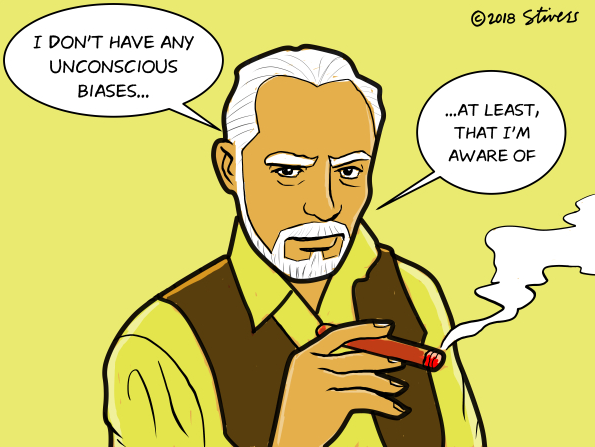
Biases are the involuntary shortcuts your brain takes to associate feelings and thoughts to someone. They help you make sense of the world by reducing your brain’s cognitive load — 98% of our thinking happens in our subconscious mind!
Basically, it’s a feature of your brain that can also be a bug ;) You don’t usually see any holes in your assumptions until somebody else points them out or you consciously take a step back to uncover them.
Who’s this article for? I’m looking at you:
- Developers. You created the best software possible within the business and technical constraints at stake but still your users are struggling to use it and you want to understand why!
- Graphic designers. You are a master of Gestalt principles, and the Visual Design laws are your daily companion on decision making. Now you want to dive into UX and understand the whole customer journey.
- Product Managers. You already work consistently with UX designers, you want to share their knowledge to help you advance on Product Discovery .
Biases — do they help us?
Well yes, but they also give us a skewed perception of reality — by being aware of them you can try to remove these filters from your perception.
As designers, it is our responsibility to effectively minimise the effect biases have in our work, by understanding user behaviours and empathising with them. According to Jeff Desjardins, there are 188 known cognitive biases in existence. I would like to discuss how biases help us (wrongly) cope with 3 major modern-world problems and provide tips on how to overcome these biases.
1- They help process too much information.
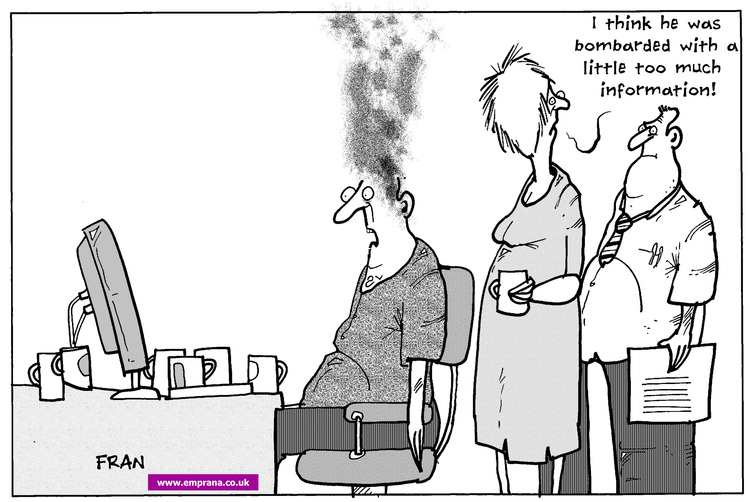
Biases help us understand the humongous flow of information we receive every day, by filtering out the bits that may be interesting to us. We might focus on details that confirm our beliefs (Confirmation bias), details that we’ve seen recently (Availability heuristic) or details that are simply framed differently (Framing effect) .
How to overcome these biases: Challenge your own hypotheses recurrently, look for past patterns rather than just immediate knowledge and seek the opinion of others on the problem you’re trying to solve!
2- They help process information without enough background.

Our brain needs to process the filtered information it takes in. So, in order to facilitate our thinking process, it might take shortcuts to find patterns (Clustering illusion), fill-in from generalities (Implicit bias) or assume that others think like us (False-consensus bias).
How to overcome them: To find a significant pattern you must increase the sample size of users, you should write-down your assumptions about your audience in order to challenge them and, finally, really get to know your users!
3- They help us act now!

With the limited information we perceive we need to act and decide. So, in order to act, we overestimate what we know (Dunning-Kruger effect), we believe we must act first on what has been started (Sunk-cost fallacy/Zeigarnik effect) and we respond favourably thus seeking approval (Social desirability).
How to overcome them: In order to act consciously, first recognise your limitations — ask a co-worker to estimate your ability if needed — and embrace an open mindset: don’t become too invested in the designs you started already before testing with users! Test early and often. Finally, when asking a user how he/she would interact with your designs try to ask indirect questions (“how do you think a user would like this?”).
Are biases good then?

No, because they influence our perception or behaviour! This said, we cannot remove them altogether as we are only humans and, thus, imperfect. It is important to recognise the biases we might have, so that we can begin to make mindful and correct assessments about our users, and design the best possible experience for them!
As we progress further into the world of machine learning and artificial intelligence, we need to ensure that these biases and shortcuts are not built-in or embedded into the technology. As designers, we need to create systems that respond to diversity and accessibility. We are excited to share with you soon an article on designing user experience for artificial intelligence ;)
At craftable we foster this mindset and instil it in our nearshore projects, partners and clients. We regularly take a deliberate step back to evaluate if any biases were affecting any of our deliverables, be it wireframes, prototypes, high-fidelity designs, user journeys or service blueprints. Explore more about our boutique software house at craftable software or leave your details below if you’re curious for more:
Am I overcoming my biases? was originally published in craftable on Medium, where people are continuing the conversation by highlighting and responding to this story.